
A full floor renovation can make your home look beautiful, but it can also cost thousands of dollars. Between buying materials, hiring contractors, removing old flooring, and cleaning up the mess, even one small room can become expensive fast.That is why peel and stick floor tiles have become such a smart option for budget home renovation.
They are simple, affordable, and beginner-friendly. You do not need heavy tools, professional skills, or a large remodeling budget. You can update an old kitchen, bathroom, laundry room, entryway, closet, or rental property with a fresh new look.
For buyers who want their home to feel cleaner, newer, and more stylish without spending too much, this type of flooring makes a lot of sense. It is not luxury flooring, and it is not perfect for every situation. But when used in the right place, it can give a room a big visual upgrade for a small price.
After working with budget flooring projects for years, I can honestly say that peel-and-stick tiles are one of the easiest ways to change the look of a room without turning your home into a construction zone.
What Are Peel and Stick Floor Tiles?
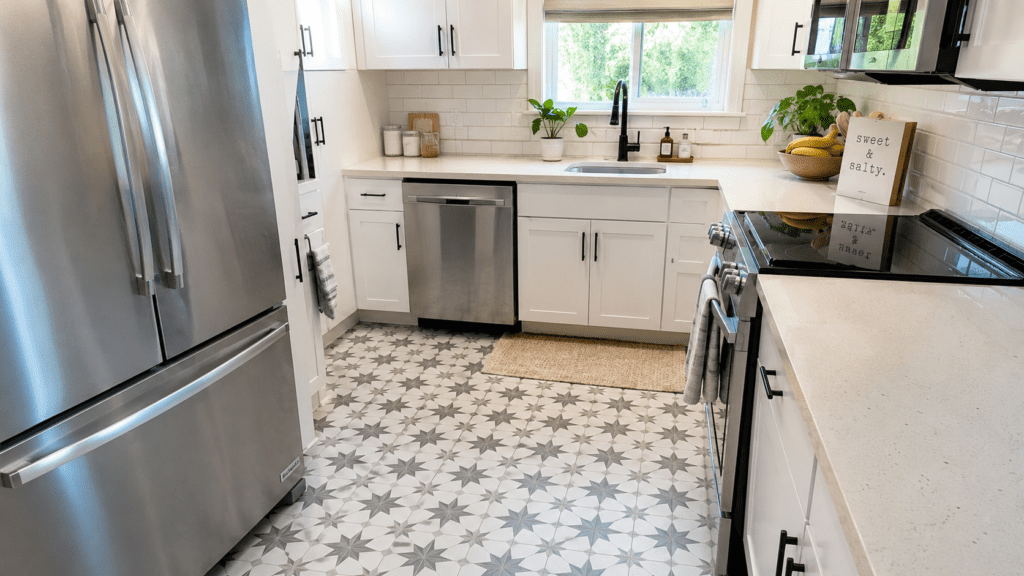
Peel and stick floor tiles are self-adhesive flooring tiles. Each tile has a sticky backing protected by paper. You peel off the backing, place the tile on a clean floor, press it down, and continue until the floor is covered.
Most options are made from vinyl, although some thicker luxury peel-and-stick tiles may have a stronger layered structure. They come in many designs, including:
- Marble-look tiles
- Wood-look planks
- Stone-look patterns
- Checkerboard tiles
- Terrazzo designs
- Neutral modern patterns
- Farmhouse and vintage styles
The main reason buyers love them is simple: they can cover outdated flooring without demolition. If you have old vinyl, dull linoleum, stained flooring, or a small room that feels tired, peel-and-stick tiles can make it look much better.
Why Budget Renovators Love Peel and Stick Floor Tiles
Most homeowners do not always have the money for a full remodel. First-time homeowners often spend most of their budget just buying the home. Young families may need practical upgrades but still have bills, children, and daily expenses. Landlords may want a fast refresh before renting a unit. Apartment owners may only need a small visual update.
That is where peel and stick floor tiles become useful.
They offer the feeling of renovation without the full renovation cost. You can make a bathroom look cleaner, brighten a laundry room, or give an entryway more personality without hiring a contractor.
For many buyers, the emotional goal is not just “new flooring.” It is this:
“I want my home to look better, but I need to stay within my budget.”
Peel-and-stick flooring fits that goal because it gives visible results quickly. A small room can often be completed in a weekend, sometimes even in one afternoon.
Best Rooms to Use Peel and Stick Floor Tiles
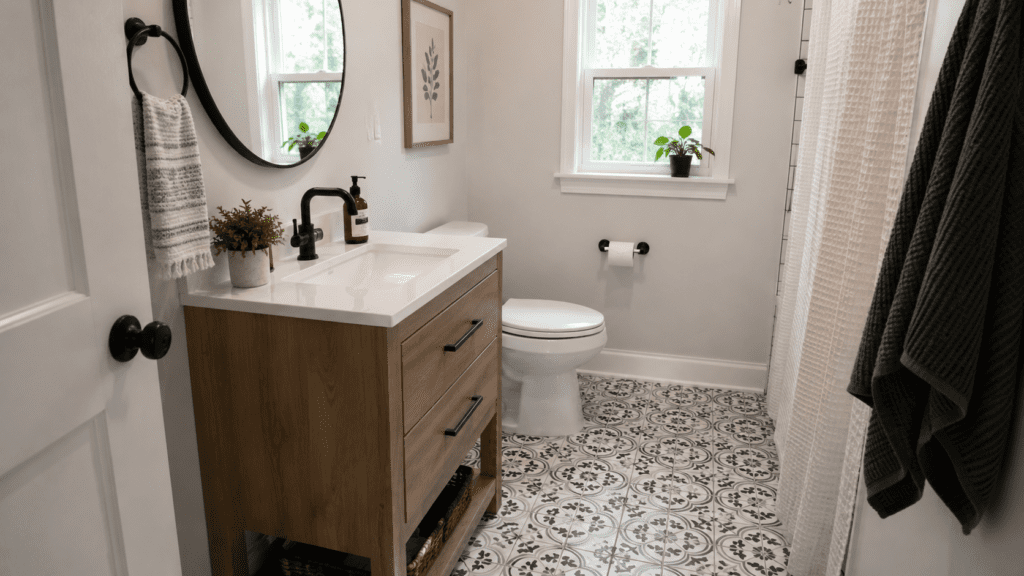
Peel-and-stick tiles can work well in many rooms, but they perform best when the floor is smooth, clean, dry, and not heavily damaged.
1. Kitchen
The kitchen is one of the most popular places to use peel-and-stick flooring. Old kitchen floors can make the whole home feel outdated. A new tile pattern can instantly make the space feel brighter and more modern.
For kitchens, choose thicker vinyl tiles with strong adhesive. Look for water-resistant or waterproof product descriptions, but remember that seams can still allow moisture if water sits too long.
2. Bathroom
A small bathroom is perfect for a budget floor makeover. Many buyers use peel-and-stick tiles to cover old vinyl or plain flooring.
For bathrooms, surface preparation matters a lot. The floor must be dry, smooth, and clean. You should also avoid leaving standing water on the floor. Peel-and-stick tiles can handle normal bathroom use, but they are not the same as professionally installed ceramic tile.
3. Laundry Room
Laundry rooms are usually small, which makes them affordable to update. A patterned tile can make a boring laundry area feel more finished.
Because laundry rooms can have moisture, choose a strong vinyl option and press the edges firmly during installation.
4. Entryway
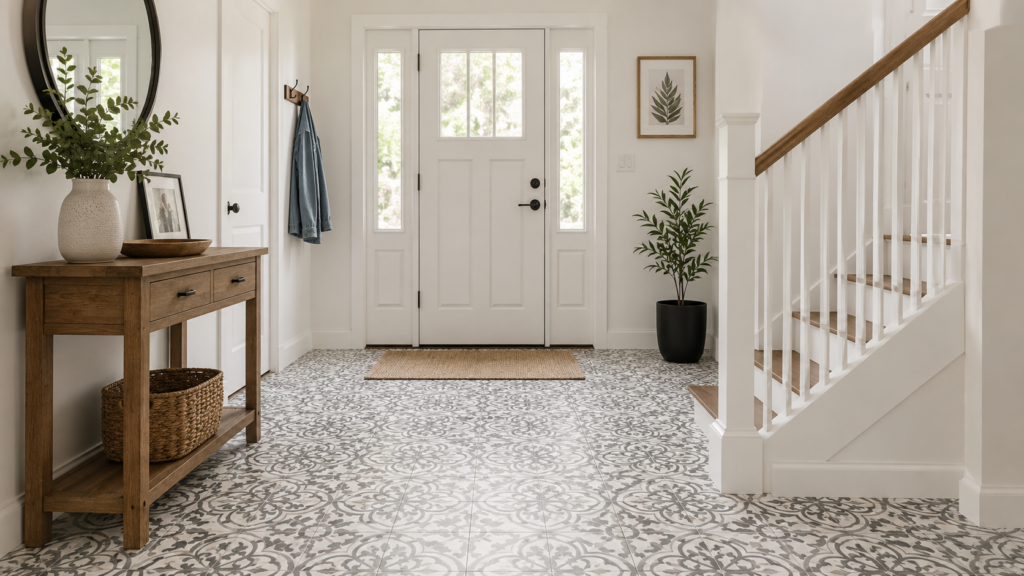
Your entryway is the first area people see when they walk into your home. Peel-and-stick tiles can make this space feel cleaner and more welcoming.
For entryways, durability is important. Shoes, dirt, and daily foot traffic can wear cheap tiles faster. Choose a thicker tile if this area gets heavy use.
5. Closets and Small Spaces
Closets, pantries, and small storage areas are great beginner projects. These areas do not usually receive heavy traffic, so they are ideal for first-time DIY users.
6. Rental Properties and Airbnb Units
Landlords and Airbnb hosts often need fast, affordable upgrades. Peel-and-stick flooring can improve photos, guest impression, and overall property appearance without major spending.
However, for long-term rentals, it is better to choose durable tiles and install them carefully. Cheap tiles in high-traffic rental areas may not last as long.
Honest Review: Are Peel and Stick Floor Tiles Worth It?
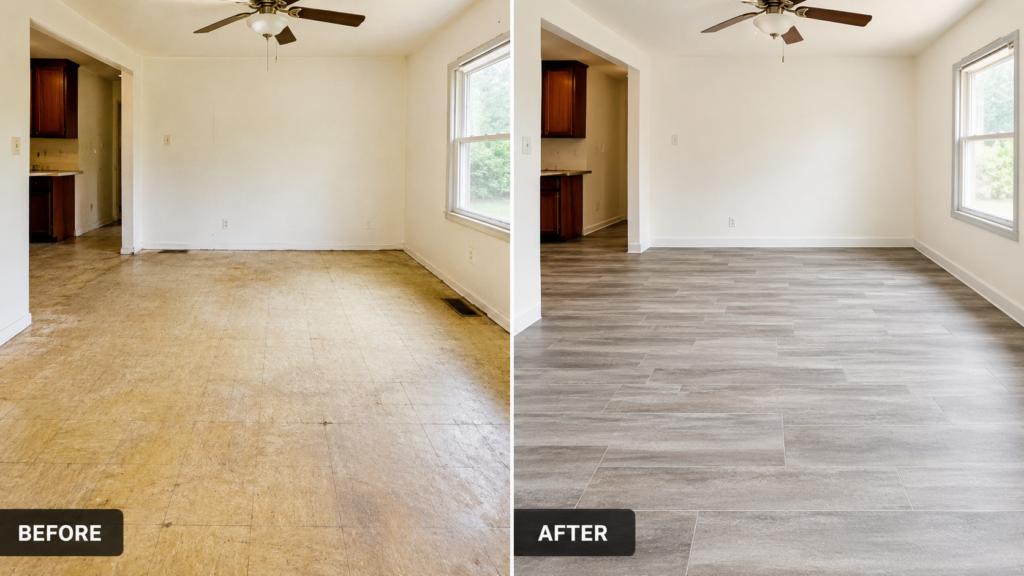
Yes, peel and stick floor tiles are worth it for the right buyer and the right room.
They are best for people who want a low-cost, attractive, simple floor update. They are not the best choice for people expecting the same feel, lifespan, and strength as ceramic tile, hardwood, or professional luxury vinyl plank.
From a practical budget-renovation point of view, their biggest value is visual transformation. They can make an old room look cleaner and newer without a major project.
The most important thing I have learned from using peel-and-stick flooring in budget makeovers is this:
The final result depends heavily on floor preparation.
If the floor is dirty, dusty, uneven, damp, or textured, the tiles may not stick well. But when the surface is properly cleaned and prepared, the result can look surprisingly good.
Pros of Peel and Stick Floor Tiles
Affordable Price
This is the biggest advantage. You can refresh a small room for much less than traditional flooring. For buyers on a tight budget, that matters.
Easy DIY Installation
You do not need professional flooring experience. You need patience, a clean surface, a measuring tape, a utility knife, and a straight edge.
Fast Room Transformation
Many small rooms can be finished in a day. That makes this flooring great for weekend DIY projects.
Many Design Options
You can choose marble, wood, stone, black-and-white, neutral, vintage, or modern styles. This makes it easier to match your home decor.
No Demolition Needed
In many cases, you can install peel-and-stick tiles over smooth existing flooring. This saves time, money, and mess.
Great for Small Budgets
You can upgrade one room at a time instead of paying for a full home renovation.
Cons of Peel and Stick Floor Tiles
Surface Preparation Is Very Important
If the floor is not clean and smooth, tiles may lift or shift.
Not Always Best for Heavy Traffic
Thin, low-quality tiles may wear out faster in busy areas like main hallways or kitchens.
Moisture Can Be a Problem
Some tiles handle moisture better than others. Bathrooms and laundry rooms need careful product selection.
Cheap Tiles May Look Less Realistic
Very low-cost designs can look flat or printed. Real customer photos help you judge the design better.
Edges Can Lift If Installed Poorly
Edges may lift if the floor has dust, old wax, moisture, or uneven spots.
How Long Do Peel and Stick Floor Tiles Last?
The lifespan depends on tile quality, room type, foot traffic, and installation quality.
In low-traffic areas like closets, guest bathrooms, or laundry rooms, good tiles can last several years. In kitchens or busy entryways, they may wear faster, especially if the tiles are thin.
For budget buyers, the key is to manage expectations. Peel-and-stick flooring is not usually a lifetime flooring solution. It is a smart cosmetic upgrade when you want a better-looking floor without spending thousands.
If you want the best results, choose thicker tiles, clean the floor carefully, and avoid dragging heavy furniture across the surface.
Are Peel and Stick Floor Tiles Good for Bathrooms?
Yes, they can be good for bathrooms, especially small bathrooms and powder rooms. But you need to choose the right product.
Look for tiles described as water-resistant or waterproof. Also check customer reviews from people who used them in bathrooms.
The most important thing is to avoid moisture under the tile. If your bathroom floor has leaks, soft spots, mold, or damaged subflooring, peel-and-stick tiles are not the right fix. You should solve the moisture problem first.
For normal bathroom use, they can work well if installed on a clean, dry, smooth floor.
Are Peel and Stick Floor Tiles Good for Kitchens?
Yes, kitchens are one of the best places to use them for a budget makeover. A new floor pattern can change the whole look of the kitchen.
However, kitchens get spills, foot traffic, chairs, crumbs, and cleaning. For that reason, choose a thicker and more durable tile. Avoid the cheapest option if your kitchen is used heavily every day.
Also, clean spills quickly. Most vinyl peel-and-stick tiles are easy to wipe, but standing water is never good for adhesive flooring.
How to Install Peel and Stick Floor Tiles Like a Beginner
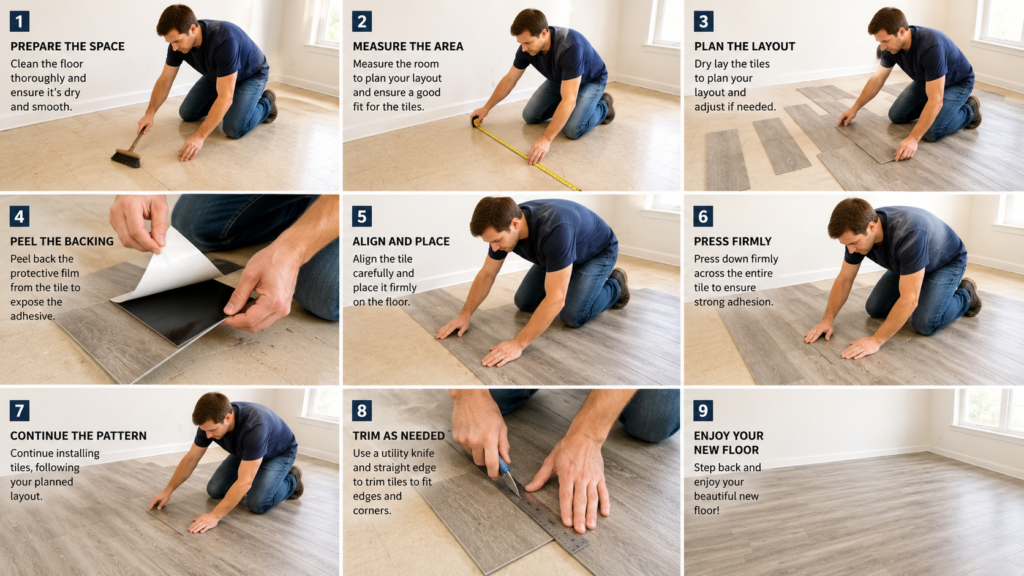
Installation is simple, but simple does not mean careless. A little preparation makes a big difference.
Step 1: Clean the Floor
Remove dirt, grease, dust, wax, and old residue. The adhesive needs a clean surface.
Step 2: Let the Floor Dry Completely
Never install tiles on a damp floor. Moisture can weaken the adhesive.
Step 3: Plan the Layout
Find the center of the room or decide where your pattern should start. Dry-lay a few tiles before peeling the backing.
Step 4: Peel and Place Slowly
Peel the backing, line up the tile, and press firmly. Work slowly so the lines stay straight.
Step 5: Cut Edges Carefully
Use a utility knife and straight edge for corners, walls, and fixtures.
Step 6: Press the Tiles Down
Use your hands or a floor roller if available. Strong pressure helps the adhesive bond better.
Step 7: Avoid Heavy Cleaning Immediately
Give the adhesive time to settle before heavy mopping or moving furniture back.
What to Look for Before Buying
Before buying peel-and-stick tiles, compare more than just the design. A pretty pattern is important, but quality matters too.
Tile Thickness
Thicker tiles usually feel better and may last longer. Thin tiles can still work in low-traffic rooms, but they may show floor imperfections more easily.
Adhesive Strength
Check reviews for comments about lifting edges. Strong adhesive is very important.
Water Resistance
For kitchens, bathrooms, and laundry rooms, choose tiles with moisture-friendly features.
Customer Photos
Real photos are more helpful than perfect product images. They show how the tiles look in normal homes.
Price Per Square Foot
Do not only compare pack price. Check how much area each pack covers.
Design Realism
Wood-look, marble-look, and stone-look tiles should look natural enough for your space.
Return Policy
Buy from a seller with easy returns, especially if you are unsure about color or texture.
Common Mistakes to Avoid
Many bad results happen because of simple mistakes.
Do not install tiles over dirty, dusty, wet, rough, or uneven floors. Don’t rush the layout. Do not assume all peel-and-stick tiles are the same. Do not buy only one pack without measuring the room first.
Also, order a little extra. Mistakes happen, and you may need extra tiles for cuts, corners, or future repairs.
A good rule is to buy around 10% more than your measured floor area.
Who Should Buy Peel and Stick Floor Tiles?
These tiles are a great choice for:
- Budget-conscious homeowners
- First-time homeowners
- DIY beginners
- Apartment owners
- Landlords
- Airbnb hosts
- Young families
- People updating older homes
- Anyone improving one room at a time
They are especially useful if you want your home to look cleaner and newer without full renovation costs.
Who Should Avoid Them?
Peel-and-stick flooring may not be the best choice if your floor has major damage, deep cracks, moisture issues, or uneven surfaces. It is also not ideal if you want a permanent high-end flooring solution.
If you expect the same durability as ceramic tile or hardwood, you may be disappointed. But if your goal is a smart, affordable, good-looking floor refresh, they can be a very practical choice.
Final Thoughts
Peel and stick floor tiles are one of the most useful budget home renovation products for buyers who want a noticeable upgrade without a major expense. They are affordable, simple to install, and available in many stylish designs.
They work best in kitchens, bathrooms, laundry rooms, entryways, closets, small apartments, rental units, and older homes with outdated floors. The key is choosing good-quality tiles and preparing the floor properly before installation.
They are not perfect. They need a clean surface, careful layout, and realistic expectations. But for the price, they can deliver a beautiful before-and-after result that makes your home feel fresher, cleaner, and more comfortable.
If you are trying to renovate your floor without renovating your budget, peel-and-stick tiles are definitely worth considering.
Explore some Tiles
If you are ready to refresh an old floor without paying for expensive installation, choose a design that matches your room, measure your space carefully, and start with one small area first. A simple peel-and-stick floor makeover may be the affordable upgrade your home needs.