
Updating your home’s flooring can completely transform the look and feel of a room. Unfortunately, many homeowners put off flooring projects because they assume the process will be expensive, complicated, and time-consuming. Traditional flooring often requires professional installation, specialized tools, and a significant budget, making it difficult for many people to tackle renovations on their own.
The good news is that modern self adhesive floor tiles offer a practical alternative. These peel-and-stick flooring solutions allow homeowners to refresh outdated floors without the hassle associated with traditional materials. Whether you’re updating a kitchen, bathroom, laundry room, or rental property, self-adhesive tiles provide a simple way to achieve attractive results while keeping costs under control.
For DIY home renovators, this type of flooring can be especially appealing because it combines convenience, affordability, and style. With minimal preparation and basic tools, many flooring projects can be completed in a single weekend.
Let’s explore why self adhesive floor tiles have become a popular choice and how they can help simplify your next renovation project.
Why Flooring Renovations Can Be Challenging
Flooring is one of the most noticeable features in any room. Worn-out, outdated, or damaged floors can make an entire space feel neglected, even if everything else looks great.
However, replacing flooring often comes with several common challenges:
- High material costs
- Professional installation fees
- Long project timelines
- Specialized equipment requirements
- Disruption to daily life
- Difficult removal of old flooring
For homeowners working within a budget, these obstacles can delay renovation plans for months or even years.
Fortunately, flooring technology has evolved significantly, providing easier alternatives that make home improvement projects more accessible.
What Are Self Adhesive Floor Tiles?
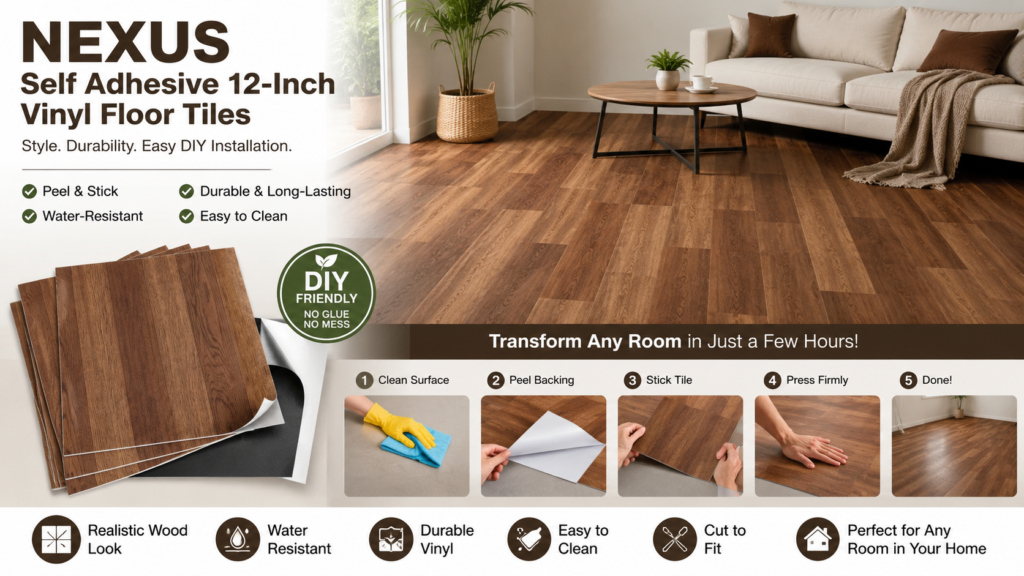
Self adhesive floor tiles are vinyl flooring tiles that feature a built-in adhesive backing. Instead of requiring glue, mortar, or nails, the tiles simply peel and stick directly onto a properly prepared surface.
The installation process is straightforward:
- Clean and dry the floor.
- Measure the room and plan the layout.
- Peel away the backing paper.
- Position the tile carefully.
- Press firmly into place.
- Continue placing tiles edge-to-edge.
- Trim around obstacles when necessary.
Because the adhesive is already attached to the tile, homeowners can avoid many of the complications associated with traditional flooring installations.
Benefits of Choosing Self Adhesive Floor Tiles
Budget-Friendly Home Improvement
One of the biggest advantages of peel-and-stick flooring is affordability.
Traditional flooring projects often include expenses such as:
- Flooring materials
- Underlayment
- Adhesives
- Professional labor
- Installation tools
Self adhesive floor tiles eliminate many of these additional costs, making them an attractive option for budget-conscious renovators.
Simple DIY Installation
Many homeowners hesitate to start flooring projects because they lack construction experience.
Self-adhesive flooring is specifically designed for DIY installation. Most projects require only basic measuring tools, a straight edge, and a utility knife.
This simplicity allows beginners to achieve impressive results without hiring contractors.
Faster Project Completion
Traditional flooring installations can take several days or even weeks depending on the size of the space.
With peel-and-stick flooring, many rooms can be completed in a matter of hours. This means less disruption to your daily routine and faster enjoyment of your newly renovated space.
Easy Maintenance
Another reason homeowners appreciate vinyl flooring is its low-maintenance nature.
Routine care typically includes:
- Sweeping
- Vacuuming
- Damp mopping
- Spot cleaning spills
Unlike some flooring materials that require refinishing or specialized cleaning products, vinyl tiles are generally simple to maintain.
Where Self Adhesive Floor Tiles Work Best
One of the reasons these flooring products are so popular is their versatility.
They can be used in a wide variety of residential spaces, including:
Kitchens
Kitchens experience heavy foot traffic and occasional spills. Water-resistant vinyl tiles provide an attractive flooring solution that is easy to clean.
Bathrooms
Bathrooms often require moisture-resistant materials. Peel-and-stick vinyl flooring can offer practical performance while improving the room’s appearance.
Laundry Rooms
Laundry areas frequently encounter humidity and water exposure. Vinyl flooring helps create a durable and easy-to-maintain surface.
Bedrooms
For homeowners looking to update outdated carpet or worn flooring, self-adhesive tiles can provide a fresh new look without extensive renovations.
Basements
Many finished basements benefit from affordable flooring solutions that can withstand varying environmental conditions.
Rental Properties
Property owners often seek cost-effective upgrades that improve appearance while remaining budget-friendly. Self adhesive floor tiles can be a practical solution for rental units.
Choosing the Right Flooring Style
Modern vinyl flooring has come a long way from the designs available years ago.
Today’s options often replicate the appearance of:
- Hardwood flooring
- Natural stone
- Slate
- Ceramic tile
- Marble
This allows homeowners to achieve the look of premium flooring materials without the associated costs.
When selecting a style, consider:
- Existing room décor
- Wall colors
- Furniture finishes
- Natural lighting
- Long-term design preferences
Neutral colors and realistic wood-look finishes tend to remain attractive across changing design trends.
A Practical Solution for DIY Renovators
For homeowners seeking an affordable flooring upgrade, products like Nexus Self Adhesive 12-Inch Vinyl Floor Tiles offer a practical example of how modern peel-and-stick flooring can simplify renovations.
These tiles feature:
- Peel-and-stick installation
- Durable vinyl construction
- Water-resistant surfaces
- Easy customization around corners and fixtures
- Realistic flooring designs
- Low-maintenance care requirements
Because they are designed for direct application to smooth, dry surfaces, they can help homeowners complete renovations more efficiently without relying on specialized installation methods.
Rather than spending significant amounts on labor and materials, many DIY renovators use this type of flooring to achieve professional-looking results while staying within budget.
Tips for a Successful Installation
Even though installation is straightforward, following a few best practices can improve results.
Prepare the Surface Carefully
A clean and smooth surface allows the adhesive backing to bond properly.
Remove:
- Dust
- Dirt
- Debris
- Wax buildup
- Loose flooring materials
Plan Your Layout First
Before peeling any backing paper, arrange tiles to visualize the layout. This helps reduce awkward cuts near walls and doorways.
Measure Twice
Accurate measurements help minimize waste and ensure a more polished final appearance.
Use a Sharp Utility Knife
Clean cuts create better-looking edges around cabinets, vents, and corners.
Apply Firm Pressure
Press each tile firmly after placement to maximize adhesion and reduce the chance of lifting over time.
Who Benefits Most from Self Adhesive Floor Tiles?
While almost any homeowner can use peel-and-stick flooring, certain groups may find it especially useful.
Busy Homeowners
Quick installation means less downtime and faster room updates.
Growing Families
Durable surfaces help withstand everyday household activity.
DIY Enthusiasts
The simple installation process makes flooring projects approachable for beginners and experienced renovators alike.
Property Investors
Affordable upgrades can improve a property’s appearance without significantly increasing renovation costs.
Budget-Conscious Renovators
Those seeking maximum visual impact for minimal investment often find self adhesive flooring particularly attractive.
Conclusion
Floor renovations don’t have to involve major expenses, lengthy timelines, or professional installation crews. Modern self adhesive floor tiles provide homeowners with a simple and affordable way to refresh outdated spaces while maintaining control over their renovation budget.
With easy installation, low maintenance requirements, water-resistant performance, and a wide range of attractive designs, peel-and-stick vinyl flooring continues to be a popular option for DIY home renovators. Whether you’re updating a kitchen, bathroom, rental property, or an entire home, this flooring solution can help you achieve a cleaner, more modern look with less effort.
Before starting your next renovation project, consider exploring self-adhesive flooring options and learning more about how they can simplify your home improvement journey.
Explore Some self adhesive floor tiles
I want to decorate our hotels rooms and balcony etc so send me yours contacts details plz
My contacts no is 82880-93884