

Seasoning your griddle Surface Properly (Blackstone Griddle Review)
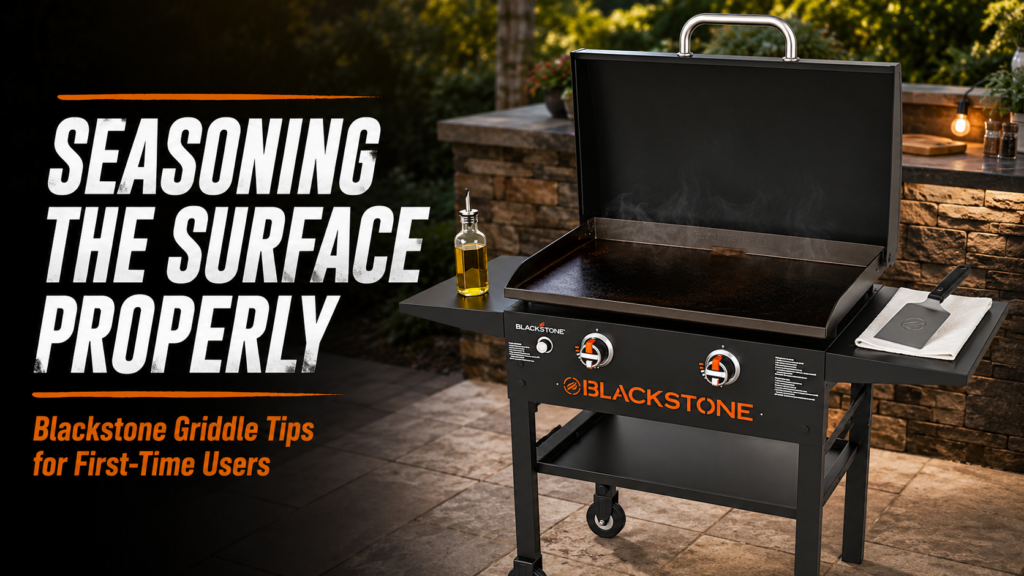
Seasoning your griddle sounds fancy, but it is really simple. You are not performing kitchen magic here. You are just creating a smooth cooking surface that helps food cook better. Think of it like giving your griddle a protective jacket. A very shiny, oily, heat-loving jacket.
When you season the surface properly, your food has a better chance of behaving itself. Eggs slide more easily. Pancakes flip without a dramatic rescue mission. Burgers get that lovely crisp edge. You also help protect the metal from rust, sticky spots, and sad-looking patches.
This step matters a lot for beginners. It also matters if you are reading a Black stone griddle review before buying one. A griddle can perform beautifully, but only if you treat the surface right. Good seasoning can turn your cooking from “oops” to “look at me now.”
Why Seasoning Matters So Much
Your griddle surface is made to handle high heat and big meals. But fresh metal needs a little care first. Seasoning fills tiny surface pores with oil. Heat then bonds that oil to the metal. This creates a darker, smoother, more non-stick cooking layer.
You do not need to understand the science deeply. You just need to know the result. A seasoned surface makes cooking easier and cleaning faster. It also gives your food better color and texture.
You may notice the surface changes color after seasoning. That is a good thing. It may turn brown, bronze, or black over time. Do not panic when it looks darker. That dark layer is your griddle becoming more useful.
A well-seasoned griddle also gives you more confidence. You can cook eggs without fear, smash burgers without scraping like a pirate and you can make fried rice without leaving half of it behind.
Start With a Clean Surface
Before seasoning, you need to clean the griddle surface. This is especially important if it is brand new. New griddles can have factory residue, dust, or packaging oils. You do not want those flavors joining your breakfast party.
Use warm water and a small amount of mild dish soap. Clean the surface gently with a cloth or sponge. Then rinse it well and dry it completely. Do not leave water sitting on the surface. Water and bare metal are not best friends.
After drying, turn on the heat for a few minutes. This helps remove hidden moisture. You may see the surface change color slightly. That is normal. The metal is heating and getting ready for oil.
Make sure the surface is fully dry before adding oil. If water remains, the oil will not bond properly. It may also pop and sizzle in annoying ways. You want seasoning, not a tiny kitchen fireworks show.
Use the Right Amount of Oil
This is where many people get a little too excited. You do not need a swimming pool of oil. In fact, too much oil can cause sticky patches. A thin layer works much better.
Choose an oil with a high smoke point. Canola oil, vegetable oil, avocado oil, and flaxseed oil are common choices. You can also use griddle seasoning products. The goal is simple. You need oil that can handle heat without burning too quickly.
Pour a small amount onto the warm surface. Then spread it with a paper towel or clean cloth. Use tongs if the surface is hot. Your fingers are useful, so please keep them away from hot metal.
Spread the oil across every part of the cooking surface. Cover the corners and edges too. You want a thin, even shine. If you see thick wet spots, wipe them down. The surface should look lightly polished, not greasy.
Heat It Until It Smokes
Once the oil is spread, turn the heat up. Let the griddle get hot enough for the oil to smoke. This smoke may look worrying, but it is part of the process. The oil is bonding to the metal.
Keep the heat going until the smoke slows down. This can take several minutes. The surface will begin to darken. That darker color means the seasoning layer is forming.
Do not rush this part. If you stop too early, the oil may stay sticky. Sticky seasoning can make cooking feel frustrating. It can also trap food bits later.
You should also keep the area ventilated. Open a window if you are inside. If you are outdoors, you are already ahead of the game. Your neighbors may smell something and suddenly become very friendly.
Repeat for a Stronger Layer
One layer is helpful, but several layers are better. After the first oil layer smokes and settles, let the surface cool slightly. Then add another thin coat of oil. Heat it again until it smokes.
Repeat this process a few times. Three to five layers are usually enough for a good start. Each layer makes the surface smoother and stronger. It also helps create that classic dark griddle finish.
You do not need to make it perfect on day one. Seasoning improves with regular cooking. Every batch of bacon, burgers, or onions adds character. Your griddle slowly becomes more non-stick with use.
This is one reason many cooks love flat-top cooking. The surface grows with you. It starts as plain metal and becomes your personal cooking stage. That is pretty fun for a kitchen appliance.
Cook Fatty Foods First
After seasoning, your first few meals can help build the surface. Fatty foods are great for this. Bacon, sausage, burgers, and onions are excellent early choices. They add flavor and help deepen the seasoning layer.
You may want to avoid delicate foods right away. Eggs and thin fish can wait until the surface improves. Give your griddle a few hearty meals first. Let it build confidence before you ask it to perform tricks.
Cooking onions is a nice beginner move. They release moisture and flavor while spreading oil around. Plus, they smell amazing. Suddenly, seasoning feels less like maintenance and more like dinner.
If you are writing your own Black stone griddle review, mention this part. New users love practical tips. They want to know what actually helps during the first cook.
Keep It Clean After Cooking
Seasoning does not end after the first setup. You maintain it every time you cook. After cooking, scrape away food bits while the surface is still warm. Use a griddle scraper and gentle pressure.
Add a small splash of water for stuck food. Let the steam loosen the bits. Then scrape again and wipe the surface clean. Avoid using harsh cleaners unless truly needed.
Once clean, dry the surface well. Then add a very thin layer of oil. Spread it across the surface before storing the griddle. This keeps the seasoning protected and ready for next time.
This small habit makes a big difference. It helps prevent rust and keeps the surface smooth. It also saves you from a long cleanup later.
Do Not Fear Imperfections
Your seasoning layer may not look perfect at first. That is completely normal. You may see light spots, darker patches, or uneven color. Do not treat your griddle like a museum painting.
The surface will improve with use. Each cooking session adds more seasoning. Each cleanup helps shape the layer. Over time, it becomes darker, smoother, and more reliable.
You should only worry if the surface feels sticky, rusty, or flaky. Sticky spots usually mean too much oil was used. Rust means moisture stayed too long. Flaking can happen when old seasoning builds unevenly.
Most issues are easy to fix. Clean the problem area, dry it well, and reseason with thin oil layers. Your griddle is forgiving. It does not hold grudges like a burnt pancake.
Final Thoughts on Seasoning
Seasoning the surface properly is one of the best things you can do. It protects your griddle and improves your cooking. It also helps you enjoy the appliance more from the start.
You do not need special chef skills. You only need heat, oil, patience, and a little common sense. Keep the oil thin, let it smoke, and repeat the process. Then cook often and clean gently.
Once you get the hang of it, seasoning feels easy. It becomes part of the griddle routine. Your food cooks better, cleanup gets easier, and your confidence grows.
A great griddle surface is built over time. So do not stress about perfection. Fire it up, season it well, and enjoy the tasty learning curve.
Tools That Make Cooking Easier
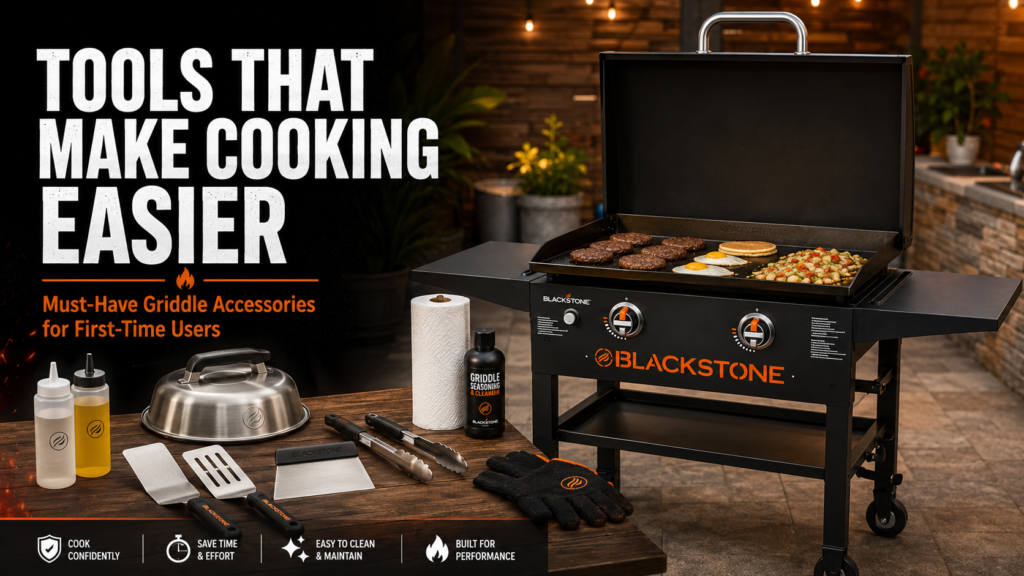
Cooking on a griddle feels exciting, but the right tools make it much easier. You do not need a chef’s toolbox. You just need a few simple items that help you cook faster, cleaner, and with less stress.
A Blackstone griddle gives you a big flat surface to enjoy. That space is great for burgers, pancakes, eggs, fried rice, and vegetables. But without the right tools, things can get messy quickly. You may chase onions across the surface, may flip pancakes like flying carpets. You may also wonder why your burger is stuck to the spatula.
Good tools solve many small problems before they ruin your mood. They help you move food easily, by protecting your hands from heat. They also make cleanup feel less like a punishment.
If you are reading a Black stone griddle review, tools are worth thinking about too. The griddle itself matters, but your setup also shapes the cooking experience. A few smart accessories can make you feel ready from the first meal.
If you’re planning to cook outdoors regularly, you may also want to compare Blackstone with other leading flat-top brands. Our complete Blackstone vs Camp Chef Griddle comparison explains the major differences in cooking performance, portability, and value.
A Strong Spatula Is Your Best Friend
A griddle spatula is not the same as a tiny kitchen spatula. You need something wider, stronger, and built for flat-top cooking. A good spatula helps you flip, press, scrape, and lift food with confidence.
You will use it for almost everything. Burgers need flipping. Eggs need lifting. Pancakes need gentle handling. Fried rice needs quick moving. A strong spatula makes each task feel smoother.
Look for a stainless steel spatula with a flat edge. The flat edge slides under food better. It also helps scrape browned bits from the surface. Those browned bits can add flavor when used correctly.
You may want two spatulas if you cook often. Two spatulas make chopping and moving food easier. They also help with large items like cheesesteaks or hash browns. You can scoop from both sides and feel very professional.
Do not choose a flimsy tool that bends too easily. It may work for soft eggs, but it struggles with burgers. You want a spatula that feels steady in your hand. Your wrist will thank you later.
Squeeze Bottles Keep Things Neat
Squeeze bottles may look simple, but they are very useful. You can fill them with oil, water, sauces, or marinades. They help you control how much liquid hits the surface.
When you pour oil from a large bottle, it can come out too fast. Suddenly, your griddle looks like a shiny lake. A squeeze bottle gives you better control. You can add just a small amount where needed.
Water bottles are also helpful during cleanup. A little water can loosen stuck food bits. The steam helps soften the mess. Then you can scrape it away without a wrestling match.
Sauce bottles are great for fun meals too. You can drizzle teriyaki sauce over fried rice, can add butter to vegetables. And you can even make pancake designs if you feel creative.
Just label your bottles clearly. You do not want to spray water when you planned to add oil. That kind of surprise wakes everyone up.
Tongs Help You Stay in Control
Tongs are another must-have tool for griddle cooking. They help you move meat, vegetables, bread, and sausages safely. You can grab food without getting too close to the hot surface.
Choose tongs with a comfortable grip. Long tongs keep your hands farther from the heat. This matters when steam rises or grease pops. You want control without doing a little dance backward.
Tongs are perfect for turning bacon. They also help move chicken strips and grilled vegetables. You can pick up toasted buns without flattening them. That is important because nobody wants sad buns.
You can also use tongs to hold a paper towel during seasoning. This keeps your fingers away from hot metal. It also helps spread oil evenly across the surface.
Avoid plastic tongs near high heat. They can melt or bend. Stainless steel tongs are usually a better choice. Silicone tips can work, but check their heat rating first.
A Scraper Makes Cleanup Faster
A griddle scraper may not look exciting, but it earns respect quickly. It helps remove food bits, grease, and sticky spots. After cooking, this tool becomes your cleanup hero.
Use the scraper while the surface is still warm. Warm food bits come off more easily. You can scrape them toward the grease trap. Then wipe the surface with a towel.
A scraper also helps during cooking. You can move chopped food into piles, can separate ingredients quickly. You can even clean one zone while another zone keeps cooking.
Choose a scraper with a sturdy handle and straight edge. It should feel comfortable and safe. You do not need to press too hard. Let the tool do most of the work.
Cleaning becomes much less annoying with a good scraper. You finish faster and enjoy your food sooner. That alone makes it worth having.
A Melting Dome Adds Extra Fun
A melting dome is a simple round cover. You place it over food to trap heat and steam. It helps melt cheese, warm toppings, and cook thicker food more evenly.
If you love cheeseburgers, this tool is a treat. Place cheese on the patty, add the dome, and wait briefly. The cheese melts beautifully and looks restaurant-ready. You may feel like charging yourself extra.
A dome also helps cook vegetables faster. Add a splash of water under the dome. The steam softens the vegetables while the griddle adds flavor. It is simple and very satisfying.
You can use it for fried eggs too. The trapped steam helps cook the top without flipping. This is helpful when you want soft yolks and less drama.
A melting dome is not required, but it makes cooking more playful. It also gives you more control over texture. That is always helpful on a busy cooking surface.
Heat-Resistant Gloves Protect Your Hands
Griddle cooking can get hot quickly. Handles, tools, and nearby surfaces may heat up too. Heat-resistant gloves help protect your hands during busy cooking.
You may need them when moving accessories. You may use them when handling a hot dome. They are also helpful when adjusting items around the griddle.
Choose gloves made for high heat. Make sure they fit well. Loose gloves can feel awkward when you need control. Tight gloves can feel uncomfortable during longer cooking sessions.
Gloves are especially useful for beginners. They give you extra confidence around the heat. You can focus on cooking instead of worrying about surprise burns.
Even with gloves, stay careful. Heat can still pass through after long contact. Gloves help, but they do not make you invincible.
A Good Oil and Seasoning Kit Helps
Your tools should also include basic surface care items. Oil, paper towels, and a scraper are key. These items help maintain the seasoning layer after every cook.
A smooth surface makes cooking easier. Food releases better, and cleanup becomes faster. You also protect the griddle from rust and sticky buildup.
Keep your oil bottle close while cooking. Use small amounts as needed. Add a thin layer after cleaning too. This keeps the surface ready for your next meal.
Some people buy a ready-made griddle cleaning kit. That can be helpful if you like organized tools. But you can also build your own simple kit.
In any Black stone griddle review, surface care should not be ignored. A great griddle performs better when you maintain it properly. Your tools help you do that with less effort.
Final Thoughts on Griddle Tools (Blackstone Griddle Review)
The right tools make griddle cooking easier, safer, and more enjoyable. You do not need to buy everything at once. Start with a strong spatula, tongs, squeeze bottles, and a scraper.
Then add extras as your cooking style grows. A melting dome is great for burgers and eggs. Heat-resistant gloves help with safety. A simple cleaning kit keeps your surface in good shape.
With the right tools, you can cook with more confidence. You can flip better, clean faster, and enjoy the process more. Best of all, you can avoid looking confused while chasing mushrooms around the griddle.
Griddle cooking should feel fun, not stressful. Good tools help you relax and enjoy the sizzle.
How to Control Grease and Oil
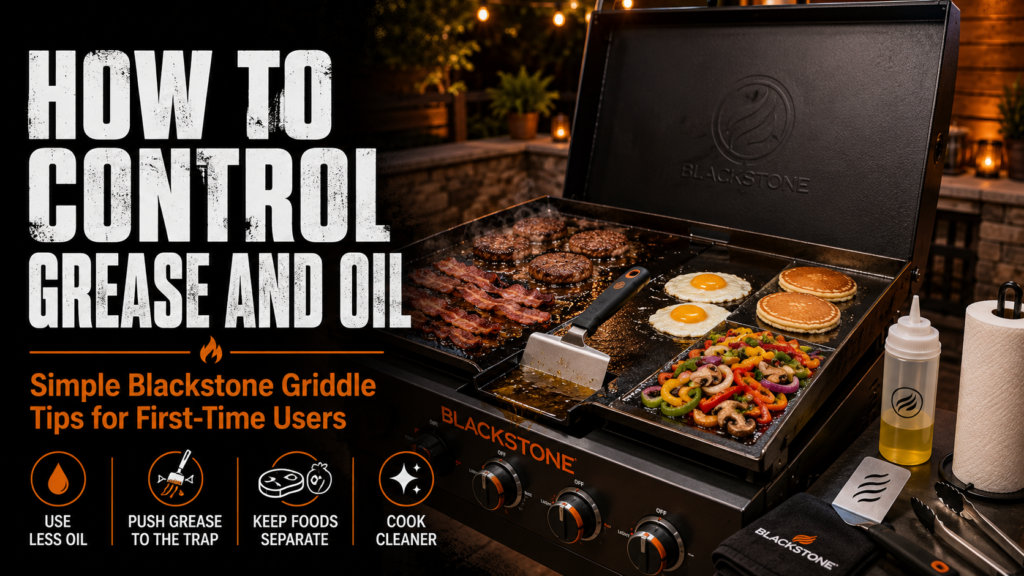
Cooking on a griddle feels fun until grease starts acting wild. One minute, you are flipping burgers calmly. The next minute, oil is sliding around like it owns the place.
Do not worry. You do not need chef-level skills to control grease and oil. You only need a few simple habits. Once you learn them, your griddle cooking becomes cleaner, safer, and much easier.
A Blackstone griddle gives you a large flat cooking surface. That surface is great for big meals and fast cooking. But it also means grease can spread quickly. If you are not careful, food can become oily instead of crispy.
This is an important point in any Black stone griddle review. The griddle can cook amazing food, but grease control matters. When you manage oil well, your meals taste better. Cleanup also becomes less annoying.
Start With Less Oil Than You Think
Most beginners use too much oil at first. It feels safe to add extra oil. You may think more oil means less sticking. But too much oil can create greasy food and messy cooking.
Start with a small amount of oil. You can always add more later. A thin layer is usually enough for most foods. Your goal is a light shine, not a swimming pool.
Use a squeeze bottle for better control. It lets you place oil exactly where you need it. You can add a small line or a few drops. This is much easier than pouring from a large bottle.
Spread the oil with a spatula or paper towel. If the surface is hot, use tongs for safety. You want the oil to cover the cooking area evenly. Thick puddles should be pushed away or wiped down.
Different foods need different amounts of oil. Pancakes need only a little. Vegetables may need a bit more. Burgers often make their own grease. Bacon definitely brings its own party.
Let Fatty Foods Do the Work
Some foods do not need much added oil. Bacon, sausage, burgers, and steak release fat as they cook. If you add too much oil before cooking them, things can get messy fast.
Let fatty foods cook in their own grease. This adds flavor and helps brown the food. It also keeps you from making the surface too oily.
When cooking burgers, start with a lightly oiled surface. The beef will release fat as it cooks. You can move that grease toward the trap as needed. This keeps the burger area cleaner.
Bacon needs even less help. Place it on the griddle and let it cook slowly. The fat will render and spread. You can use that fat to cook eggs or potatoes nearby.
That is one fun part of griddle cooking. You can use natural grease wisely. Bacon grease and crispy potatoes are basically best friends. They deserve their own sitcom.
Use Heat Zones to Control Grease
Heat control helps manage grease better than you may expect. If the griddle is too hot, oil can smoke quickly. If it is too cool, grease can sit and soak into food.
Create different heat zones on your griddle. Keep one area hot for searing. Use another area at medium heat for slower cooking. Keep a cooler zone for resting finished food.
This gives you more control. You can move greasy foods away from high heat. You can also prevent oil from burning too quickly. Food cooks better when each zone has a purpose.
For example, cook burgers on a hotter side. Move them to a cooler side after searing. Then toast buns in a clean, lightly oiled area. This keeps everything organized and tasty.
Vegetables also benefit from heat zones. Start them on medium heat with a little oil. Move them away if they soften too fast. This helps avoid soggy vegetables and smoky oil.
Push Grease Toward the Grease Trap
Your griddle has a grease management system for a reason. Use it often while cooking. Do not wait until the surface looks like a tiny oil lake.
A scraper is your best tool here. Gently push extra grease toward the grease trap. Do this during cooking, not only after cooking. Small cleanups make the final cleanup easier.
Do not scrape too aggressively. You are guiding the grease, not fighting a dragon. Use steady pressure and keep your movements controlled.
Pay attention to where grease collects. Some foods release fat quickly. Burgers, bacon, and sausage can fill the surface faster. If you see grease pooling, move it away.
Keep the grease cup or tray lined if possible. Foil liners can make disposal easier. They also help you avoid the dreaded grease-cup cleanup face. You know the face.
Keep Foods in Their Own Areas
A large griddle lets you cook many foods together. That is great, but it can also create grease chaos. You do not want burger grease running into pancakes.
Give each food its own area. Cook greasy meats in one zone. Keep bread, eggs, or pancakes in a cleaner zone. This helps each food taste like itself.
Use your spatula like a traffic officer. Move food, redirect oil, and keep things tidy. It may feel silly, but it works. Your griddle surface needs a little order.
If grease starts moving toward delicate foods, scrape it away. You can also place delicate foods on the higher side. Many griddles have a slight slope toward the grease trap.
This setup helps grease drain naturally. Let gravity help you. It does not ask for payment or complain about dinner.
Avoid Burning Oil
Burnt oil can make food taste bitter. It can also create extra smoke. If your oil starts smoking heavily, the heat may be too high.
Use oils with high smoke points. Canola, vegetable, avocado, and peanut oil are common choices. These oils handle griddle heat better than butter alone.
Butter tastes great, but it burns faster. Use it carefully. You can mix it with oil to help reduce burning. Add butter near the end for flavor.
If oil burns, scrape the area clean. Add fresh oil only after the surface calms down. Do not keep cooking in burnt oil. Your food deserves better treatment.
Smoke is not always bad on a griddle. A little smoke can happen during high-heat cooking. But thick, harsh smoke is a warning sign. Lower the heat and clean the area.
Clean as You Cook
Cleaning while cooking sounds boring, but it helps a lot. You do not need to stop everything. Just scrape small messes when they appear.
Push food bits and extra grease toward the trap. Wipe small oily areas when needed. Keep a clean zone ready for finished food.
This habit keeps flavors from mixing too much. It also prevents burnt bits from sticking to fresh food. Nobody wants pancake batter with burger crumbs. That is not fusion cooking.
A little water can help loosen sticky spots. Use only a small splash on a warm surface. Let steam lift the residue. Then scrape it away carefully.
Clean cooking also makes you look more confident. Even if you are guessing, you will look organized. That is half the fun.
Finish With a Thin Oil Coat
After cooking, cleanup matters. Scrape away food bits and grease while the surface is warm. Then wipe the surface clean with paper towels.
Once the surface is dry, add a thin coat of oil. This protects the seasoning layer. It also helps prevent rust before your next cook.
Do not leave thick oil on the surface. Too much oil can become sticky. A light coat is enough. Think shine, not slime.
This final step keeps your griddle ready. Next time, you can start cooking faster. You will also spend less time fixing dry or rusty spots.
Final Thoughts on Grease Control
Grease and oil are part of griddle cooking. You do not need to fear them. You just need to manage them with simple habits.
Use less oil at the start. Let fatty foods release their own grease. Move extra grease toward the trap often. Keep foods in their own zones.
Good grease control makes food crispier, cleaner, and more enjoyable. It also makes cleanup much easier. That means more time eating and less time scraping.
With a little practice, you will control grease like a pro. You may even enjoy the process. Just do not let the bacon grease know. It already has too much confidence.
First Meal Ideas That Won’t Fail
Your first griddle meal should feel fun, not frightening. You do not need a fancy recipeor chef tricks. You just need simple foods that cook evenly and forgive small mistakes.
A new griddle can feel a little intimidating. The surface is wide, hot, and ready for action. You may stare at it like it is a cooking stage. That is normal. Every griddle owner has that first “now what?” moment.
The best first meals are easy to control. They should cook quickly and not stick too much. They should also help you learn heat zones. Once you understand the surface, everything feels easier.
This is also useful when reading a Black stone griddle review. A good review should not only discuss features. It should also explain what you can cook first. After all, nobody buys a griddle just to admire it.
Thinking about taking your griddle on camping trips? Our guide on the Best Griddle for RV Camping covers the pros and cons of cast iron and non-stick options for outdoor cooking adventures.

Start With Smash Burgers
Smash burgers are one of the best first meals. They are simple, tasty, and hard to mess up. You only need ground beef, salt, pepper, buns, cheese, and toppings.
Start with small beef balls. Place them on a hot griddle surface. Then press each one flat with a strong spatula. You should hear that happy sizzle right away.
The hot surface creates crispy edges. That crispy edge is the main reason people love smash burgers. You get flavor without complicated steps. It is almost unfair how easy they are.
Do not move the patties too early. Let them cook until the bottom develops a crust. Then scrape underneath and flip them. Add cheese right after flipping.
You can toast the buns nearby. This makes them warm, crisp, and less likely to get soggy. Add onions if you want extra flavor. They cook beautifully in the burger juices.
Smash burgers teach you heat control fast. You learn how food browns. You also learn how grease moves. Plus, everyone gets fed quickly, which makes you look confident.
Try Pancakes for Easy Practice
Pancakes are another beginner-friendly meal. They help you understand temperature without too much pressure. They also make breakfast feel like a small celebration.
Use medium heat for pancakes. If the griddle is too hot, the outside burns quickly. If it is too cool, the pancakes look pale and sad. Nobody wants sleepy pancakes.
Add a light coat of oil or butter. Then pour small circles of batter onto the surface. Keep them spaced apart. Pancakes love personal space.
Watch for bubbles on top. When the edges look slightly dry, it is time to flip. Slide your spatula under gently. Then flip with confidence, not panic.
The first pancake may look odd. That is completely normal. The first pancake is usually the test pancake. It bravely gives its life for breakfast science.
Pancakes help you learn even cooking. You can see hot spots easily. If one pancake browns faster, that area is hotter. Move the next batch around as needed.
Cook Fried Rice Without Stress
Fried rice is a great first dinner idea. It is fast, flexible, and fun to move around. You can use leftover rice, eggs, vegetables, and cooked chicken.
Cold rice works best for fried rice. Fresh rice can become soft and sticky. Leftover rice stays firmer and fries better. It also saves food from the fridge.
Start with a little oil on medium-high heat. Add vegetables first. Peas, carrots, onions, and peppers work well. Let them cook until slightly tender.
Move the vegetables to one side. Add eggs to another area. Scramble them quickly with your spatula. Then mix everything together when the eggs are cooked.
Add the rice and spread it out. Let it sit for a short time. This helps it get light crispy edges. Stir it often, but not every second.
Soy sauce adds flavor, but use it carefully. Too much can make rice salty and wet. Add a little, taste, then adjust. Your griddle is not asking for a soy sauce bath.
Fried rice teaches you how to use space. You can cook different ingredients in different zones. Then you bring them together like a tiny dinner reunion.
Make Breakfast Sandwiches
Breakfast sandwiches are easy and satisfying. They also help you practice cooking several items together. You can cook eggs, sausage, bacon, and bread at once.
Start with bacon or sausage. These foods release grease, which adds flavor. Move extra grease toward the trap if needed. Keep one cleaner area for bread.
Crack eggs onto a lightly oiled spot. You can break the yolks or keep them whole. A melting dome helps cook the tops faster. It also makes you feel fancy.
Toast English muffins, buns, or bread nearby. Watch them closely because bread can brown quickly. A golden toast is great. A black toast is just a crunchy apology.
Add cheese to the egg or meat. Let it melt slightly before building the sandwich. Then stack everything together while warm.
This meal feels simple but teaches many skills. You learn timing, heat zones, grease control, and flipping. You also get a breakfast worth bragging about.
Go Simple With Grilled Vegetables
Grilled vegetables are perfect for a lighter first meal. They are colorful, quick, and easy to season. You can use zucchini, onions, mushrooms, peppers, or asparagus.
Cut the vegetables into similar sizes. This helps them cook evenly. Thick pieces take longer. Thin pieces can soften quickly.
Add a small amount of oil to the griddle. Then spread the vegetables in one layer. Do not pile them too high. Vegetables need space to brown.
Season with salt, pepper, garlic powder, or lemon juice. Keep it simple at first. You can add more flavors later.
Stir and flip them every few minutes. Let some sides get golden. That color means flavor is building.
Vegetables help you practice gentle cooking. They also show how quickly moisture can appear. If the surface gets watery, spread them out more.
Try Quesadillas for a Quick Win
Quesadillas are another almost-fail-proof option. They are simple, fast, and very forgiving. You only need tortillas, cheese, and your favorite filling.
Place one tortilla on the warm griddle. Add cheese and cooked filling. Chicken, peppers, onions, or beans all work well. Then place another tortilla on top.
Cook until the bottom turns golden. Flip carefully with a wide spatula. Cook the second side until crisp. The cheese should melt inside.
Do not overfill the quesadilla. Too much filling makes flipping harder. It can also spill everywhere. Delicious filling on the griddle is still a mess.
Quesadillas teach you patience. If the heat is too high, the tortilla burns before cheese melts. Medium heat usually works best.
Slice them into wedges and serve with salsa. You will feel successful quickly. That is exactly what a first griddle meal should do.
Final Thoughts on First Griddle Meals
Your first meal does not need to be perfect. It only needs to be simple and enjoyable. Choose foods that teach you basic griddle skills.
Smash burgers help you learn searing. Pancakes teach heat control. Fried rice teaches space management. Breakfast sandwiches teach timing. Vegetables and quesadillas keep things easy.
Start with one simple meal before cooking for a crowd. You can invite everyone later. For now, let yourself practice without pressure.
A griddle becomes easier every time you use it. You learn its hot spots, timing, and personality. Yes, your griddle has a personality. Some days, it is bold and smoky.
Keep your tools nearby and your oil light. Use medium heat when unsure. Scrape as you go and enjoy the process.
Your first meal can be delicious without being complicated. Fire it up, stay relaxed, and let the griddle do its thing.
Here is buyer-intent content you can add near the end of your Black stone griddle review article.
FAQs
Yes, a Blackstone griddle can be worth buying for beginners. You get a large flat cooking surface, simple heat control, and plenty of cooking space. You can make burgers, pancakes, eggs, fried rice, steaks, vegetables, and breakfast sandwiches. The learning curve is not too hard, but you must season and clean the surface properly.
Start with simple foods like smash burgers, pancakes, bacon, eggs, quesadillas, or fried rice. These meals help you learn heat zones, oil control, and flipping. Avoid delicate foods like thin fish on your first try. Give yourself a few easy wins before trying trickier meals.
Yes, seasoning is very important. Seasoning helps protect the cooking surface and makes food release more easily. A properly seasoned griddle also gives better flavor over time. You should season it before your first cook and add a thin oil layer after cleaning.
It is not hard to clean if you do it after every cook. Scrape food bits while the surface is still warm. Push grease into the grease trap. Wipe the surface clean and add a thin coat of oil. If you ignore cleanup, grease and rust can become a problem.
Yes, you can use it often if you maintain it well. Daily use can actually improve the seasoning layer. Just clean it properly, control grease, and keep the surface lightly oiled. If the griddle stays outdoors, use a good cover to protect it from moisture.
It depends on what you cook and how much oil you use. You can cook vegetables, lean meat, chicken, seafood, and breakfast foods with less oil. However, greasy foods like bacon and burgers still release fat. The griddle gives you control, but your food choices matter most.
For small families or limited space, a smaller model can be easier to manage. For parties, meal prep, or large families, a bigger surface is better. Think about where you will use it, how many people you cook for, and how much storage space you have.
It can replace a regular grill for many foods, but not all. A griddle is great for smash burgers, eggs, pancakes, fried rice, tacos, and chopped vegetables. A grill is better if you want open-flame marks and smoky flavor. Many buyers enjoy having both.
No, it does not need a lot of oil. In fact, too much oil can make food greasy. A thin layer is usually enough. Foods like bacon, sausage, and burgers release their own fat. A squeeze bottle helps you control oil better.
The biggest benefit is cooking many foods at the same time. You can cook eggs, bacon, pancakes, and toast together. You can also make burgers, onions, and buns on one surface. This makes it great for families, backyard meals, and weekend cooking.
Pain Points for New Users and Easy Solutions
Food sticks to the surface
New users often worry when food sticks during the first few cooks. This usually happens because the surface is not seasoned well. It can also happen when the griddle is not hot enough.
Solution: Season the surface before cooking. Use a thin layer of high-smoke-point oil. Let the griddle preheat before adding food. Do not flip food too early. Give it time to form a light crust.
The surface looks uneven after seasoning
A new griddle may look patchy after the first seasoning. Some areas may look brown, black, or bronze. This can make beginners think they ruined it.
Solution: Do not panic. Uneven color is normal at first. Keep adding thin seasoning layers. Cook fatty foods like bacon or burgers during the first few uses. The surface will darken and improve over time.
Grease spreads everywhere
Flat-top cooking can feel messy when grease starts moving around. Burgers, bacon, and sausage release a lot of fat. This can make the surface slippery and smoky.
Solution: Use a scraper while cooking. Push extra grease toward the grease trap. Keep greasy foods in one zone. Use less oil at the start. Let fatty foods cook in their own grease.
Food cooks too fast or burns
A griddle gets hot quickly. Beginners may use high heat for everything. This can burn pancakes, toast, vegetables, or thin meat.
Solution: Use heat zones. Keep one area hot for searing. Keep another area at medium heat. Use lower heat for delicate foods. When unsure, start at medium heat and adjust slowly.
Cleanup feels confusing
Many new users do not know whether to wash, scrape, or oil the surface. Some use too much water. Others leave grease sitting too long.
Solution: Clean while the surface is warm. Scrape food bits into the grease trap. Use a small splash of water for sticky spots. Wipe dry and add a thin oil coat. Keep the routine simple.
Rust appears on the surface
Rust can appear if the surface stays wet or uncovered. This is common when the griddle is stored outdoors. It can also happen after poor cleaning.
Solution: Dry the surface fully after cleaning. Add a thin layer of oil before storage. Use a weather-resistant cover. If rust appears, clean it off and reseason the surface.
The griddle needs more tools than expected
Some beginners think the griddle comes ready for everything. Then they realize they need spatulas, bottles, scrapers, and cleaning supplies.
Solution: Start with basic tools only. Buy a strong spatula, scraper, tongs, squeeze bottle, and heat-safe gloves. Add extras later, like a melting dome or burger press.
Important Precautions for New Blackstone Griddle Users
It needs regular maintenance
A Blackstone griddle is not a “cook and forget” appliance. You must season it, clean it, dry it, and oil it. If you dislike maintenance, this may feel annoying.
It can rust if not protected
The cooking surface can rust when exposed to moisture. This is especially important for outdoor storage. A cover helps, but you still need proper care.
It may feel messy at first
Grease control takes practice. Fat can spread quickly across the flat surface. New users may need a few cooks before feeling fully comfortable.
It does not give the same smoky grill flavor
A griddle gives great browning and crispy edges. However, it does not give the same open-flame flavor as a regular grill. If you love deep smoky grill marks, this may be a drawback.
It needs outdoor space
Many Blackstone griddles are designed for outdoor cooking. You need a safe, ventilated area. This can be difficult for people with small balconies, tight patios, or no outdoor space.
It can get very hot
The large surface can become extremely hot. This is useful for cooking, but beginners must stay careful. Heat-safe gloves and long tools can help reduce risk.
It may require extra accessories
You can cook with basic tools, but accessories make the experience easier. A scraper, squeeze bottles, spatulas, cover, and cleaning kit may add to the total cost.
Final Buyer-Focused Summary
A Blackstone griddle is a strong choice if you enjoy outdoor cooking, family meals, and fast flat-top recipes. It gives you space, flexibility, and plenty of fun cooking options. You can make breakfast, lunch, dinner, and party food on one surface.
However, it is not perfect for everyone. You need to season it, clean it, control grease, and protect it from rust. New users may need a little practice before getting perfect results.
Overall, this Black stone griddle review section shows one clear thing. The griddle is beginner-friendly, but it rewards good care. If you want easy meals, crispy edges, and a fun cooking setup, it can be a great buy.